Rust Cloth Farming Record Attempt Explained
Video: I Became Rust's #1 Farmer...
Need articles like this for your video? They help promote it on YouTube and Google — order them in the Telegram bot @sat_sit_bot. It writes articles around your video, embeds the video and publishes them on popular niche websites (no ads). Your first 50 articles are free.
· based on the channel JTeles
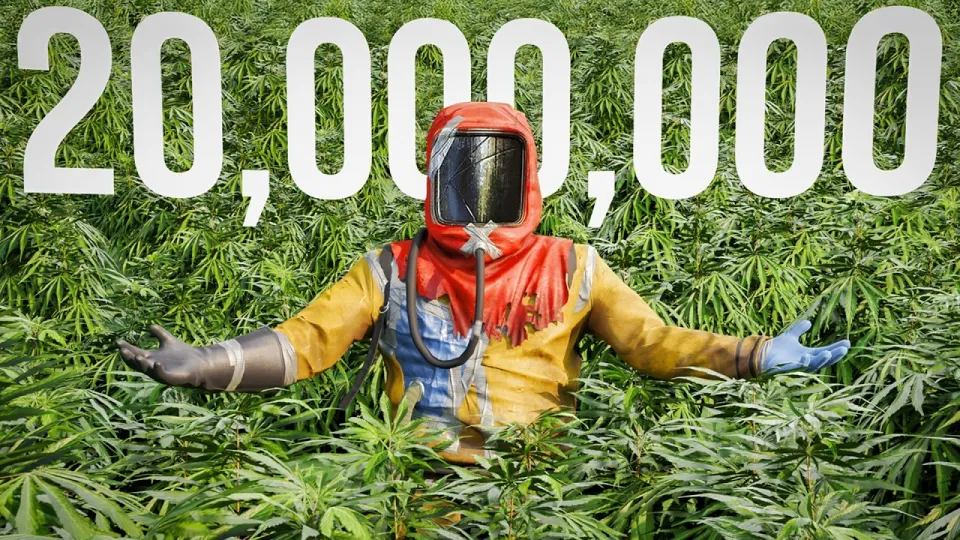
Rust cloth farming is a numbers game: hemp seeds, planters, water and time, repeated until the total dwarfs anything a normal wipe produces. In a video published on 25 September 2026, creator JTeles set out to become Rust's #1 farmer by turning a starting stock of 126,000 cloth into 20,000,000 cloth within a single wipe, a seven-day window. The attempt turned into a server-wide conflict when a large clan decided to stop it, and the run is documented in a long-form video you can watch after grabbing the War Thunder free bonus for PC and consoles promoted in the description.
What the Rust cloth farming challenge involved
The core rules were simple and brutal: start from 126,000 cloth, end at 20,000,000 cloth, and do it all before the wipe ends. Cloth in Rust comes from hemp, which is grown in planters and harvested, so a target of this size is not a matter of a few lucky barrels — it requires an industrial-scale farm with hundreds of planters, a steady water supply, lighting, and enough storage to hold the output.
The seven-day deadline shaped everything. Instead of a solo grind, JTeles invited viewers onto the server to help build and run the operation, turning the project into a community effort. That decision raised the ceiling on how fast the farm could grow, but it also made the attempt public, which is exactly how the opposition found out about it.
Building the biggest cloth farm in Rust
Scale is the whole point of a record attempt, and the farm was built to be the largest cloth operation in the game. A build of that size means a compound rather than a base: rows of planters, the plumbing and power to keep them running, and the storage to hold millions of cloth without constant trips.
Practical requirements for a farm on this scale in Rust:
- Planter count. Reaching eight figures of cloth in a week requires a planter array in the hundreds, not dozens.
- Water and power. Sprinklers, pumps and lighting must run continuously, so the electrical and irrigation layout matters as much as the planters.
- Genetics. Cloth yield per plant depends on the genes of the seeds used, so a serious farm manages seed stock instead of planting whatever drops.
- Storage and logistics. Millions of cloth have to be sorted, moved and protected, which means boxes, secure rooms and hauling routes.
- Defense. A farm this visible becomes a target, so turrets, doors and layered walls are part of the farm budget.
According to viewers who watched the build, the finished compound was so large that simply looking at it caused server lag — a backhanded compliment to the scale of the project.
The clan war that nearly ended the run
A project this size does not stay secret. A large Russian clan learned what was being attempted and made it their business to stop the farm from finishing, which turned a farming video into a war. The conflict played out through the full Rust toolkit: open PvP, raids on the compound, base defense, negotiated alliances and constant pressure on the farmers.
The most dangerous moments came when the farm's owner was offline. Clanmates held the base through defenses without him, which is the part of the story viewers singled out most — a farm of this size survives on trust and shift coverage as much as on planter count. That combination of industrial farming and organized defense is what separates a record attempt from an ordinary wipe.
How viewers helped and what the community asked
The audience was not a passive crowd. Players joined the server to contribute to the build and the farming, and the comment section filled with practical questions and shared experience. One recurring theme was time: a viewer noted that the same project, done one plant at a time before the plant-all and harvest-all quality-of-life updates, once took three hours to plant and three hours to harvest a 1,008-planter farm on a 5x server for 17.4 million cloth. That number is a useful benchmark — it shows how close a well-run large farm can get to the 20,000,000 target, and why the goal was ambitious but not fantasy.
Other viewers focused on the human cost of a seven-day push. The creator joked on stream about going outside for the first time since wipe and finding it painfully bright, a line that landed with anyone who has ever run a wipe on a schedule. Questions about the farm's cable management and about how the clan held the base overnight came up repeatedly, and both point at the same truth: the unglamorous infrastructure is what makes a record possible.
Typical questions about Rust cloth farming
Beyond the specific challenge, the video prompted a set of general questions about how cloth farming works in Rust, and the answers apply to any wipe.
- Why cloth and not scrap or sulfur? Cloth is the backbone of the economy: it feeds bandages, medkits, clothing and, through sewing kits, much of the crafting chain. A player with millions of cloth can trade for almost anything.
- Is a mega-farm worth it on a normal server? Only with protection. A large planter array is visible from the air and produces a steady stream of value, so it attracts raiders. Most solo players are better served by a compact, hidden farm.
- How long does a large farm take to pay off? On a weekly wipe, a farm of a few hundred planters can return its build cost within a day or two if it is not raided, which is why clans fight over farm space.
- Do genetics really matter? Yes. Seed genetics determine cloth per plant, and a farm that ignores them wastes planters, water and time — the three resources a record attempt cannot spare.
All the links from the video
- War Thunder free bonus for PC and consoles: https://wtplay.link/jteles
- War Thunder mobile version: https://wtm.game/jteles
- JTeles Discord community: https://discord.gg/jteles
- JTeles on Twitter/X: https://twitter.com/xJTeles
- JTeles on TikTok: https://www.tiktok.com/@xjteles
Conclusion
The attempt to farm 20,000,000 cloth from a 126,000 starting stock in seven days is a clear demonstration of what Rust's farming systems can do when pushed to their limit, and of how quickly a big project turns a server into a battlefield. The combination of an industrial planter build, a viewer-backed crew and a rival clan determined to knock it down makes the run a useful case study for anyone planning a large farm. JTeles documents the whole push, from the first planters to the defense of the compound, in the video breakdown above. If you want to support the channel and pick up a free bonus while you are at it, use the War Thunder registration link from the video.
Key takeaways
- JTeles started with 126,000 cloth and set a goal of 20,000,000 cloth in a single wipe.
- The target had to be reached in 7 days, with viewers invited onto the server to help.
- The build became the biggest cloth farm in Rust, which drew the attention of a large Russian clan.
- The run included PvP, raids, base defense, alliances and offline defense by clanmates.
- The compound grew so large that looking at it reportedly lagged the server.
Questions & answers
How much cloth do you need to become Rust's #1 farmer?
In this challenge the target was 20,000,000 cloth, starting from 126,000 cloth and finishing within a single wipe of about seven days. That figure is far beyond normal play and required an industrial planter farm plus a crew of helpers. A viewer-reported benchmark of a 1,008-planter farm on a 5x server yielded 17.4 million cloth, which shows how large a build is needed.
How long does it take to farm millions of cloth in Rust?
It depends on planter count, seed genetics and how much time the farm runs. Before the plant-all and harvest-all updates, a 1,008-planter farm reportedly took about three hours to plant and three hours to harvest by hand. With automation and a full crew, a large farm can produce millions of cloth over several days of a wipe.
Why did a clan try to stop the farm?
A cloth farm of that size concentrates resources and attention, and a large Russian clan on the server decided to shut it down. The conflict produced raids, PvP, base defense and alliances, and the farm's clanmates had to defend the compound while the owner was offline.
Can a solo player build a huge cloth farm?
It is possible but risky. A mega-farm is visible, valuable and hard to defend alone, so solo players usually do better with a compact, hidden planter setup. Large operations work because of shift coverage, turrets and allies, which is exactly what the record attempt relied on.
Source: I Became Rust's #1 Farmer... · Markdown version